


“Imagination is everything. It is a preview of life’s coming attractions.” (Albert Einstein)
As a motivational speaker for schools, I’ve seen that high school is one of the most pivotal times in a young person’s life. It’s a period full of possibility, but also pressure, uncertainty, and self-doubt. That’s exactly why student wellbeing matters so much, and why a simple tool like a vision board can be genuinely life-changing for teenagers.
Whether you’re a student trying to find your direction, or a school looking for a meaningful wellbeing incursion for high school students, this vision board checklist is a practical starting point for developing resilience, purpose, and self-belief. Below, I’ll walk you through why vision boards work, how students can uncover their own vision, and a step-by-step checklist you can use today.
Why Vision Boards Matter for High School Students
As a motivational speaker for schools, I’ve worked with thousands of secondary students across Australia. One thing I see time and again is that students who have a clear sense of where they’re headed, who can actually visualise their future, tend to be more resilient, more focused, and better equipped to handle the challenges of high school life.
A vision board is a simple but powerful wellbeing tool. It’s a visual representation of your goals, values, and dreams. When students create one with intention, it can shift their entire mindset.
As Tony Robbins says, “Where focus goes, energy flows.”
This is exactly the kind of thinking at the heart of every student resilience program and school wellbeing program I deliver through The HopeFULL Institute. When students know what they’re working toward, the day-to-day challenges of school feel far more manageable.
What Is a Vision Board?
A vision board is a visual tool: a collage of images, words, and quotes that represents what you want your future to look, feel, and be like.
Great leaders, athletes, and entrepreneurs around the world have used vision boards to help them stay focused on their goals. From making the school sports team to getting into a dream university, a vision board helps students connect with their aspirations in a concrete, creative way.
The key is to hang it somewhere you’ll see it every day. Out of sight is out of mind. On the wall? That’s a daily reminder of who you’re becoming.
How Do High School Students Find Their Vision?
This is the question I get asked at almost every school I visit as a guest speaker for high schools. And honestly, it’s one of the most important conversations you can have with a teenager.
Here are three strategies that work:
1. Spend Time With Yourself
In a world of constant notifications and social media noise, genuine self-reflection is rare, especially for teenagers. But if you want to know what you truly want, you have to slow down and listen to yourself.
Encourage students to put the phone down, find a quiet space, and ask: What do I actually care about? What kind of person do I want to become?
This kind of introspection is central to every student wellbeing speaker program I run. It’s not soft; it’s one of the most important skills a young person can develop.
2. Find Someone Whose Vision Inspires You
Not every student will arrive at high school with a clear sense of purpose. And that’s okay. A powerful way to find your own direction is to align yourself with someone whose vision excites you.
Join a club. Volunteer. Shadow a professional. Surround yourself with people doing things that matter. Purpose is often discovered through proximity, and it’s one of the key insights I share as a youth motivational speaker working with secondary students.
3. Explore and Stay Curious
If you haven’t found your calling yet, it might simply be because you haven’t seen it in action.
As a resilience speaker for schools, I’ll tell you this: resilience is built through experience. Go to a coding workshop. Try out for the school play. Pick up a magazine about an industry you’ve never considered. A single moment of curiosity can open an entirely new path.
Vision Board Checklist for High School Students
Use this checklist to build your vision board, and start turning your goals into reality:
✓ Gather your supplies
A canvas or corkboard, printed or cut-out images, markers, glue, and sticky notes. Keep it tactile and personal.
✓ Choose your life categories
Think across all areas of your life: academic goals, friendships, health and fitness, creative passions, career dreams, travel, family, and contribution to the community.
✓ Add images that move you
Print or cut out images that genuinely excite you; don’t just pick what looks good. Pick what feels true to who you want to be.
✓ Include inspiring quotes
Find words that challenge and motivate you. These become your mental anchors on tough days.
✓ Add people who inspire you
Who are your role models? Athletes, leaders, parents, mentors: put their faces on your board as a reminder of what’s possible.
✓ Write your “why”
In your own words, write down why these goals matter to you. This is what separates a vision board from a decoration.
✓ Place it somewhere visible
Your vision board only works if you see it. Put it above your desk, on your wardrobe door, or somewhere it catches your eye every single day.
✓ Review and update it regularly
Your vision will grow and evolve, and that’s a good thing. Update your board as you grow, achieve goals, and discover new ones.
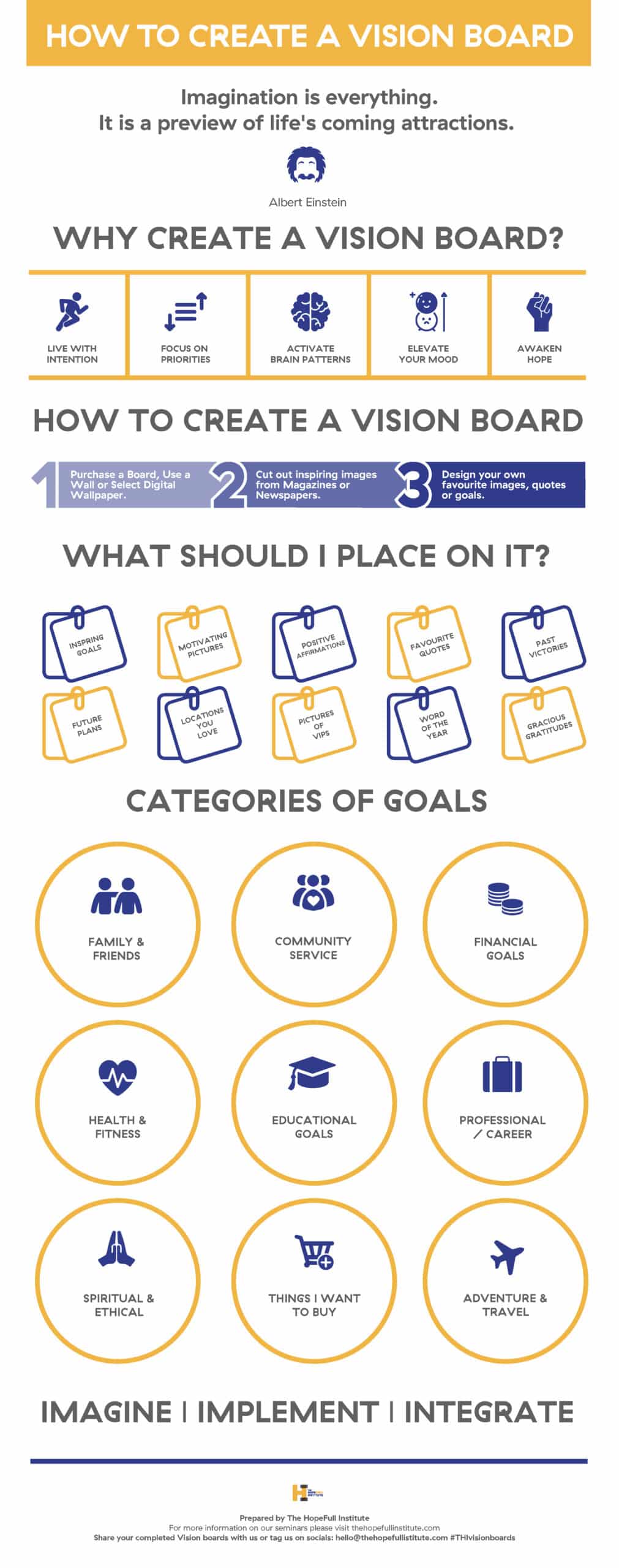
Vision Board Infographic: Download & Print
I’ve created a free infographic to act as your vision board guide, covering the why, the how, and what to include. Download and print it to use in class or at home.
Frequently Asked Questions
What age group is a vision board activity best suited for?
Vision boards work well for any high school student, though the conversations around “why” tend to go deeper with students in years 9 to 12 who are starting to think about subject selection, post-school pathways, or university.
How long does a vision board activity take?
A focused vision board session can run anywhere from 45 minutes to a full lesson block, depending on how much time you give to the reflection questions above.
Do vision boards actually work?
A vision board isn’t magic. It works because it forces clarity. When students name what they want and see it daily, they’re far more likely to act in ways that move them toward it.
Keep Building the Resilience to Chase It
A vision board is just the beginning. Turning what’s on that board into reality takes resilience, especially on the days your motivation runs out. I’ve written more about exactly that, one small habit at a time.