

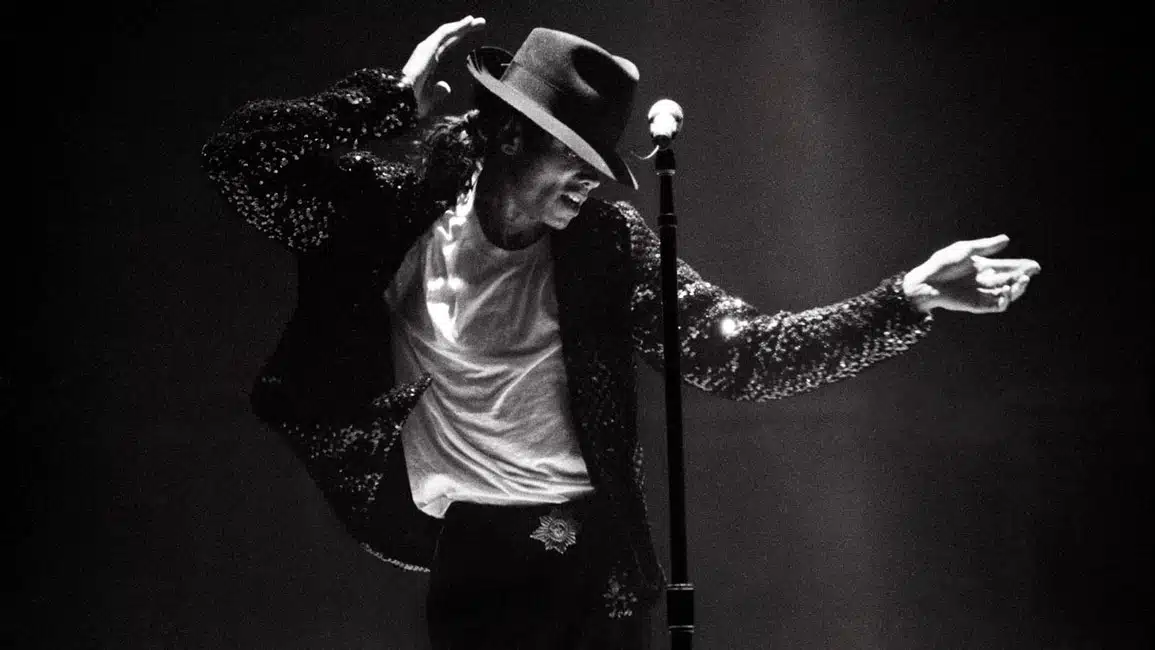
Michael Jackson is the most successful entertainer of all time, a feat recognised by the Guinness Book of World Records. He is also the most awarded recording artist in the history of popular music, and his influence stretches across generations of performers including Beyonce, Justin Bieber, Mariah Carey, Lady Gaga, Justin Timberlake, will.i.am, Bruno Mars and Usher. Each of these artists credits him as a major inspiration to their own work. Rolling Stone Magazine put it perfectly: “Trying to trace the influence of Michael Jackson on pop stars that followed him is like trying to trace the influence of oxygen and gravity.” I come back to Michael Jackson again and again, because his mastery offers one of the clearest windows we have into how motivation and flow actually work.
His success across singing, song writing, producing, dancing, fashion and business makes him worthy of serious study. It doesn’t matter whether you are a fan of his music or not, understanding how he gained mastery of his craft will help all of us develop our own skill set and find our own version of motivation.
In this piece I want to discuss how Michael Jackson achieved a state of ‘flow’, which allowed him to continue pushing the boundaries of his brilliance to new heights, because motivation without flow rarely lasts.
What Is Flow?
Flow is the term psychologists use to describe being in the zone. It could be described as being ‘on point’ or ‘on a roll’, or a ‘heightened state of consciousness’. Runners would call it ‘runner’s high’ and jazz musicians would describe it as ‘being in the pocket’. It is a ubiquitous condition, we have all experienced it. Being in ‘flow’ is an instance where our mind doesn’t wander and we are totally engaged in the moment.
Being in ‘flow’ is a mystical or transcendent state where you go beyond your sense of self and experience exceptional feats of strength, endurance and creativity. Many people refer to being in ‘flow’ as exhilarating, with a sense of mastery and control, or a sense of invincibility.
Why Time Feels Different in Flow
In flow, time passes strangely. You feel so immersed in a task or undertaking that three hours feels like fifteen minutes. Surfers speak of how fifteen seconds in a wave felt like fifteen minutes. They were one with the wave and totally present, experiencing the euphoric sensation of the moment in full and vivid detail.
Here are three tips based on quotes either by Michael Jackson or others testifying to his virtuosity. I hope they help you find your own flow and your own motivation.
Three Lessons From Michael Jackson’s Pursuit of Flow
1. Complete Immersion
“Let nothing be a take unless I am extremely satisfied, unless I felt it in my soul.”
Michael Jackson (Hand-written note prior to the shooting of the ‘Bad’ short film)
Michael Jackson had a way of commanding himself into flow. He did this with complete immersion in his task. Michael had been performing since he was five years old. He had a great instinct for the groove. Complete and utter focus is what is needed to trigger oneself into flow and sustain a state of complete immersion. Achieving a state of flow always follows focused attention: put everything else down and immerse yourself fully in the one thing in front of you.
2. Lose Your Sense of Self
“On many occasions when I am dancing, I’ve felt touched by something sacred. In those moments I’ve felt my spirit soar and become one with everything that exists. I become the stars and the moon. I become the lover and the beloved…I become the singer and the song. I become the knower and the known… I keep dancing and dancing … and dancing until there is only the dance.”
Michael Jackson
Flow states are similar to hypnotic states where people become disassociated and detached from their surroundings. This kind of quasi-mystical experience can only be obtained through deliberate practice and focus in the moment. Action and awareness merge at this point. This is where the violin player merges with the violin and actually becomes the music they play. It seems effortless and automatic, yet it takes years of deliberate practice for this sensation to occur.
3. Pursue an Activity Which Is Intrinsically Rewarding
“The divinity that he tapped into, it was unique; it was like nothing I have ever seen. He has something that was not definable. When Michael stepped out and sang and connected with the audience the molecules in the room changed.”
Sheryl Crow
Every one of us is creating an emotional environment. When we enter and exit a room, an emotional wake is left behind. Think about the emotional environment you create when you walk into a room. Is it hopeful? Is it crackling with optimism and faith? How are you elevating a room? Oprah Winfrey said, “You are responsible for the energy you bring into a room.” Make sure it shifts the climate in a positive way.
Pursuing an activity which is intrinsically rewarding is defined as autotelic, meaning it has an end in itself. We do it because we want to, because of the inherent joy the process brings. Michael Jackson was able to change the molecules in the room because the activity itself was incredibly rewarding to him. Aligning your passion with your skill set is a sure fire way to trigger flow, and one of the biggest sources of lasting motivation there is.
When Michael Jackson’s Story Returns to the Screen
Interest in Michael Jackson’s creative process has surged again with the release of Michael, the 2026 biographical film directed by Antoine Fuqua and written by John Logan, released in theatres by Lionsgate and Universal Pictures. Jaafar Jackson, Michael’s own nephew, steps into the title role, retracing the early life and rise of the King of Pop. Whatever your view of the film, it has put a new generation face to face with the same question: how did one performer sustain such an extraordinary state of creative flow for so long? You can find trailers and official details on the film’s official site.
A Box Office Phenomenon
The film has gone on to become a genuine phenomenon. As of July 2026, Michael has grossed over $978 million worldwide, making it the highest-grossing biographical film of all time, overtaking Oppenheimer. That kind of success doesn’t happen by accident. It happens when an audience recognises real mastery.
Still Topping the Charts: His Most-Streamed Singles
The renewed attention has only reinforced something the numbers already show: Michael Jackson’s catalogue has now passed 24 billion streams on Spotify alone. “Billie Jean” remains his most-streamed single by a wide margin, with almost 3 billion streams, followed by “Beat It”, “Smooth Criminal”, “Thriller” and “Rock With You” rounding out his top five. Decades on, people are still choosing to press play on the same songs, which tells you everything about how enduring true flow and mastery can be.
Why Flow and Motivation Still Matter
These three lessons form the backbone of what real, sustainable motivation looks like for young dancers, musicians, actors and other creatives. Motivation is not just willpower. It is not gritting your teeth and pushing through. Real, sustainable motivation comes from designing the conditions that make flow possible: complete immersion in the task, a willingness to lose your self-consciousness, and the pursuit of work that is rewarding in itself, not just for the outcome it produces.
Building Flow Into Everyday Practice
Michael Jackson didn’t wait for flow to arrive. He built the conditions for it through relentless, deliberate practice from the age of five. That’s the model worth borrowing: motivation grows when young creatives learn to build their own conditions for flow, rather than waiting to feel inspired before they begin.
Motivation was never about waiting to feel ready. Build the conditions for flow first, and the mastery follows.